Semi-Open Tropical Polytunnel System for Sri Lanka
Introduction
Modern greenhouse and polytunnel systems were mainly developed for cold-climate countries where sunlight
intensity, humidity, and temperature are relatively low. However, tropical countries such as Sri Lanka experience
high solar radiation, heavy rainfall, high humidity, strong microbial activity, and rapid heat accumulation.
Due to these climatic conditions, completely closed plastic polytunnels often create serious agricultural problems
in tropical regions.
Common issues include excessive internal temperature, high humidity accumulation, increased fungal diseases,
poor air circulation, plant stress, and higher operational costs.
Therefore, a tropical climate-adapted semi-open cultivation structure may provide a more practical and
economical alternative.
This report presents a low-cost semi-open tropical polytunnel concept using transparent polythene roofing, Israel
net side walls, natural shading systems, mana grass and coconut leaf materials, bamboo-based frameworks, and
natural preservation technologies.
Objectives
The objectives of this system are
• Reduce excessive heat accumulation
• Improve natural ventilation
• Lower humidity inside the structure
• Reduce fungal and bacterial disease pressure
• Minimize construction cost
• Utilize locally available natural materials
• Develop an environmentally sustainable cultivation system
• Adapt protected agriculture to tropical climates
Problems with Conventional Closed Polytunnels
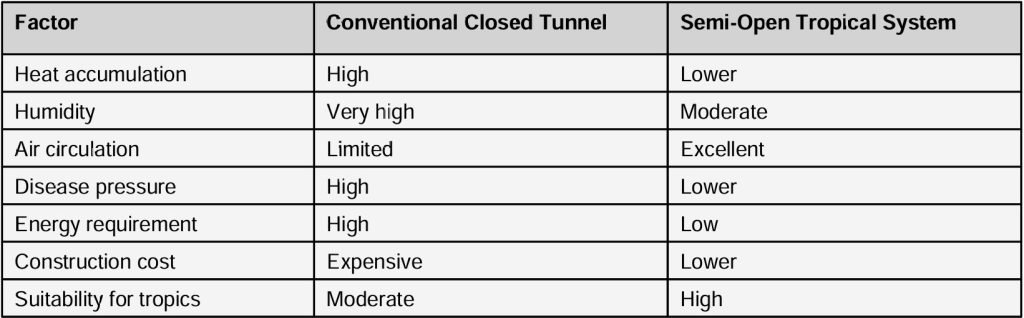
Closed plastic tunnels trap solar heat rapidly. Internal temperatures may rise above optimal plant growth
conditions causing heat stress, flower abortion, and unstable plant metabolism.
Fully enclosed tunnels also trap moisture from transpiration and evaporation. High humidity promotes fungal
diseases, bacterial infections, leaf rotting, and root problems.
Insufficient airflow may cause weak transpiration, soft plant tissues, and increased pathogen survival.
Imported greenhouse systems often require steel structures, cooling systems, exhaust fans, and artificial climate
control, making them expensive for small farmers.
Proposed Semi-Open Tropical Polytunnel Concept
The proposed structure combines rain protection, natural ventilation, partial shading, and biological cooling
instead of relying on fully closed artificial climate control systems.
The main concept is to create a naturally ventilated tropical microclimate suitable for crop cultivation while
minimizing disease pressure and excessive heat accumulation.
Structural Components
- 1. Roof System
Material: Transparent polythene sheet
Functions:
• Rain protection
• Light transmission
• Partial environmental control
Recommended Design:
• Sloped roofing
• High roof design for heat escape
• Rainwater collection system
2. Side Wall System
Materials:
• Israel net
• Shade net
• Insect net
Functions:
• Natural ventilation
• Heat release
• Insect reduction
• Air circulation
3. Natural Shading Layer
Additional internal shading can be developed using:
• Mana grass
• Coconut leaves
• Bamboo mats
• Woven natural fibers
These materials reduce direct solar stress and excessive temperature fluctuations
Key Benefits
- Efficient utilization of weeds and field waste
- Reduction or elimination of chemical fertilizer use
- Enhancement of soil microbial life
- Improvement of soil structure and fertility
- Low-cost and sustainable nutrient management
Natural Preservation Technology
1. Crush neem leaves, soursop leaves, and garlic.
2. Boil them in water to extract active compounds.
3. Add turmeric powder.
4. Add neem oil and mix thoroughly.
5. Filter the solution.
Application:
• Soak mana grass, coconut leaves, bamboo strips, and woven sheets.
• Dry properly under shade.
Benefits:
• Reduced fungal growth
• Reduced insect damage
• Slower decomposition
• Improved durability
Ventilation System
Natural airflow is the key principle of this structure.
Recommended features include:
• Continuous side net openings
• Roof ventilation openings
• Cross ventilation airflow
This ventilation system may significantly reduce disease pressure while improving plant growth and worker
comfort.
Biological Advantages
• Reduced disease pressure
• Better root respiration
• Improved microbial activity
• Enhanced nutrient uptake
• Improved pollination
• Reduced leaf wetness duration
Economic Advantages
• Lower initial investment
• Reduced energy consumption
• Use of local materials
• Reduced dependency on imported greenhouse systems
• Better suitability for small-scale farmers
Environmental Advantages
• Reduced plastic usage
• Lower chemical dependence
• Improved sustainability
• Biodegradable support materials
• Integration with ecological agricultural systems
Suitable Crops
This system may be suitable for:
• Tomato
• Capsicum
• Cucumber
• Leafy vegetables
• Ginger
• Strawberry in cool regions
• Herbs
• Seedlings
• Medicinal plants
Additional Improvements
A semi-open tropical polytunnel system using polythene roofing, Israel net side walls, natural shading materials,
and indigenous preservation technologies may provide a more climate-adapted protected cultivation method for
tropical countries such as Sri Lanka.
This approach combines modern protected agriculture with natural ecological principles to create a lower-cost,
environmentally sustainable, and biologically balanced agricultural production system.
The concept may help tropical farmers reduce production costs while improving crop health, ventilation, and
long-term sustainability.
Comparison with Conventional Greenhouses